ABOUT ME
Natasha (Tash) Ortolan was born in Brazil. She lived in Chiang Mai, Thailand, before settling in Porto in 2017, where the Atlantic light and the slow rhythm of the city taught her something she had not expected to learn.
She has always been drawn to thresholds. Between disciplines, between seasons, between one way of knowing and another. Concepts like liminality, the art of noticing, and seasonal transition are not simply research interests but ways of moving through the world.
She is currently a doctoral student at i2ADS, Faculty of Fine Arts of the University of Porto, conducting fieldwork at the Serralves Foundation. The research develops in articulation with the Faculty of Psychology and Education Sciences of the University of Porto, the Faculty of Fine Arts and the Institute of Education of the University of Lisbon.
Collaborative partnerships with the Natural History and Science Museum of the University of Porto, the Parque Biológico de Gaia, and researchers at the intersection of geoscience, art education, and science communication.
Supervised by Prof. Orlando Francisco (FBAUP/i2ADS) and Matilde Seabra (Serralves Foundation).
ACADEMIC BACKGROUND
Tash holds a degree in Geology with complementary training in Agronomy, and a master’s degree in Agronomic Engineering, both from the Faculty of Sciences of the University of Porto.
Her undergraduate work investigated urban geology along the Portuguese Coastal Way of the Camino de Santiago, reading the metropolitan landscape of Porto through its geological strata.
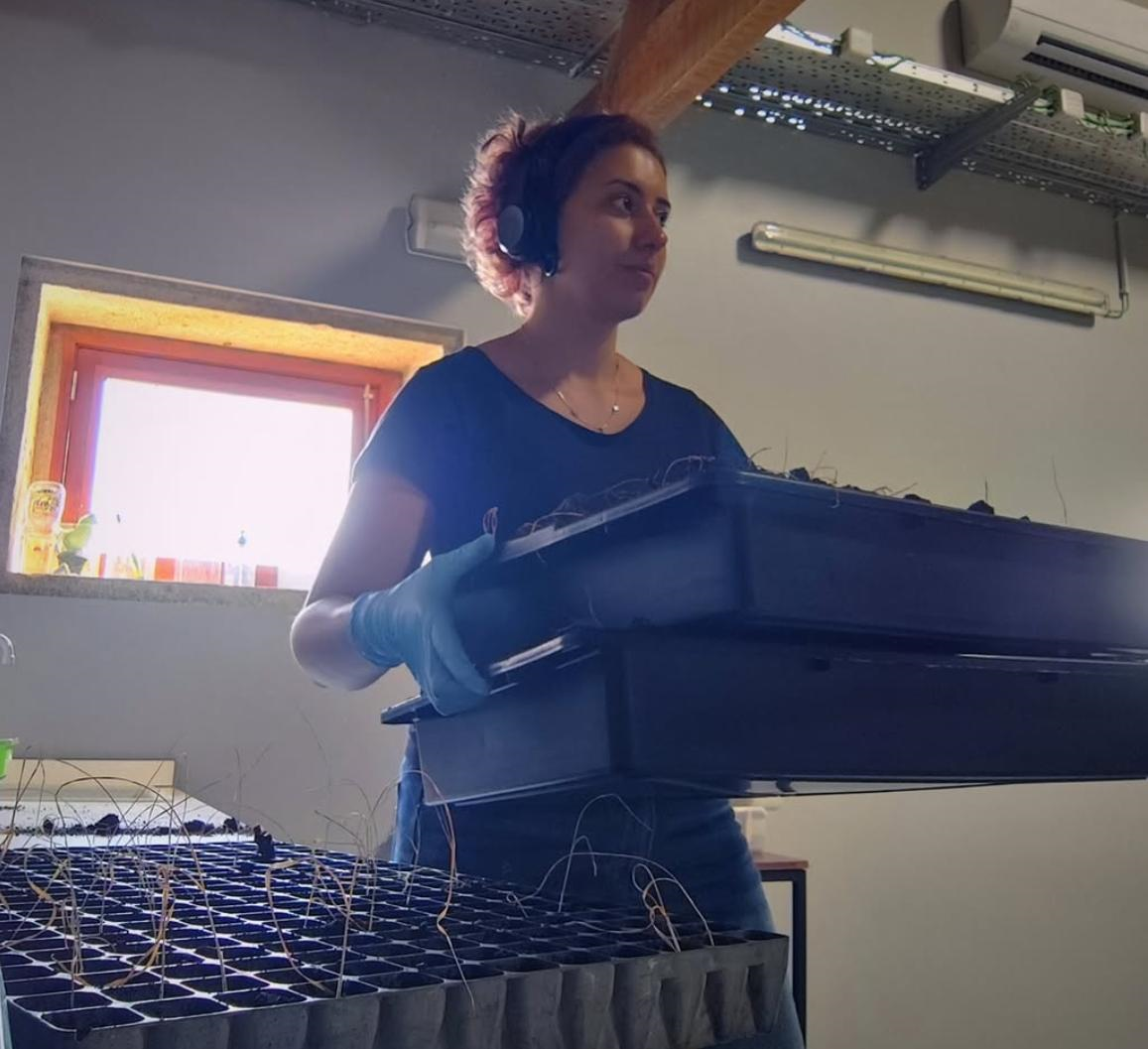
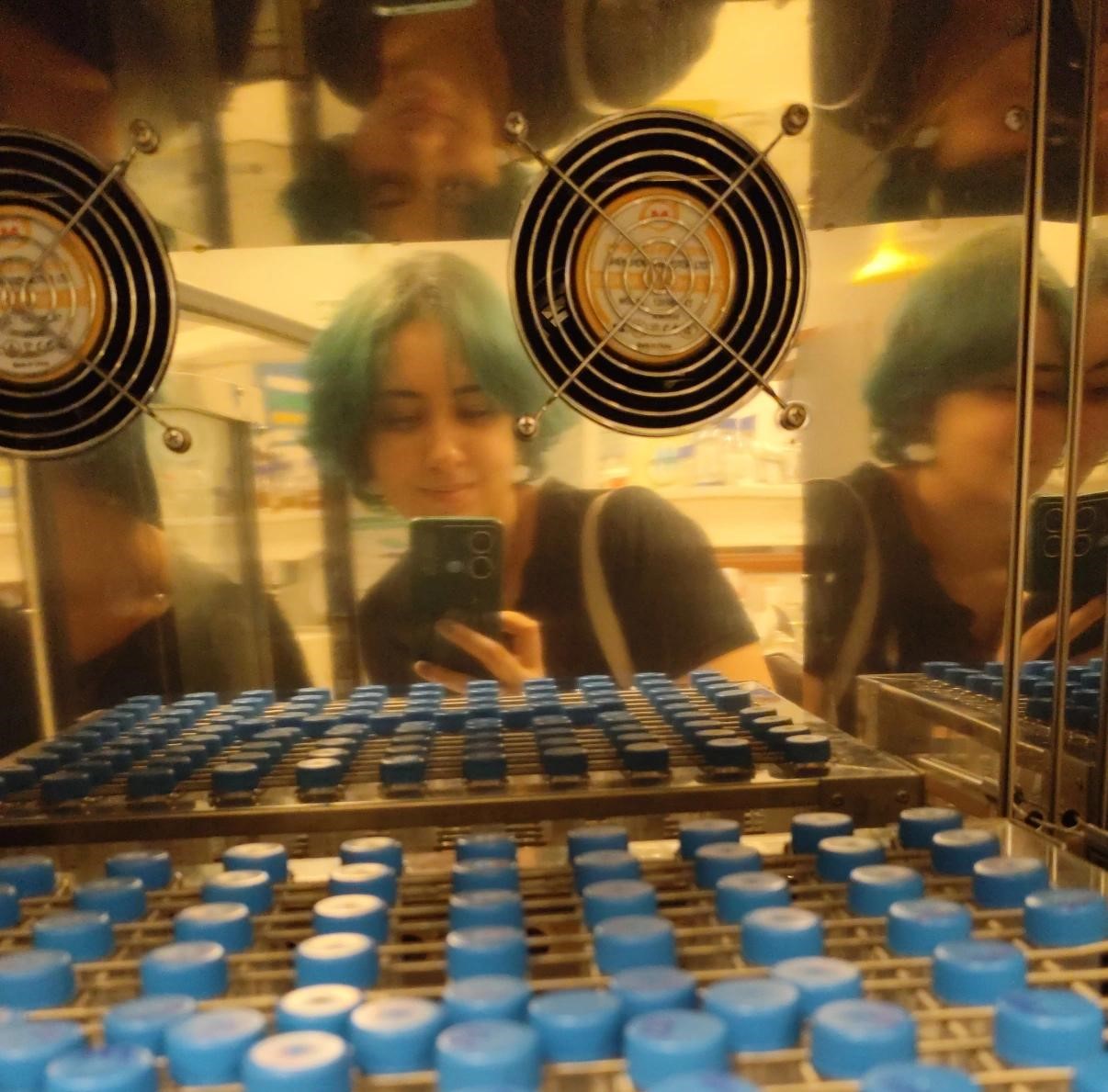
Her master’s research, developed within the WheatBiome project, examined strategies to increase wheat resilience to salinity through endophytic bacteria and pigmented cultivars, working at the intersection of plant physiology and microbial ecology. The work was presented at academic conferences and contributed to peer-reviewed publications. At its core, it asked how living systems co-constitute their own resilience in response to environmental conditions over time.
Both trajectories share a foundational concern that now drives her doctoral research: how time acts on systems, how environments are not backdrops but active forces, and how understanding requires presence across cycles rather than a single observation.
PhD RESEARCH
The research begins with a structural gap in museum studies: seasonality has been treated as atmospheric condition rather than as a constitutive force in the artistic encounter. This project works in that gap.
At the Serralves Foundation in Porto, across all four seasons, the investigation asks how seasonal time does not frame the encounter with art but inhabits it. What makes it impossible to step into the same garden twice is not simply the changing light or temperature, but something more fundamental: the way time alters perception, the body, and the relationship between a visitor and a work of art.
The project’s originality lies in an epistemological transfer between the natural sciences and the humanities. Geotechnical concepts such as stratigraphy and thixotropy operate not as metaphor but as rigorous analytical instruments, productive tools for describing what museum studies has not yet found the language to describe.
The research works toward an ontology of publics, artworks, and seasonalities at Serralves, alongside a Seasonal Atlas and a longitudinal pedagogical programme for the museum’s educational service, designed to be transferable to open-air museums across Europe.